24/7 Emergency Plumber in Fort Lauderdale, FL — Live Dispatch, Licensed Crews, Upfront Pricing
When water is moving where it shouldn't, minutes matter more than marketing. Olas Fort Plumbing has answered the phone in this city since 1990 — 50 skilled professionals and 10 fully equipped service vans staged across Broward County, ready for burst supply lines, sewage backups, slab leaks, and dead water heaters. We are the emergency plumber Fort Lauderdale FL homeowners, condo boards, restaurant operators, and property managers call when a problem cannot wait until Monday. From the canal‑front streets of Rio Vista and Las Olas Isles to the mid‑century blocks of Victoria Park and Coral Ridge, our crews know which pipe is under your slab before we lift the first tile.
Talk to a Licensed Fort Lauderdale Plumber Now — (954) 953‑0755
Request Emergency Service — Fort Lauderdale
Fill out the form and we'll call you back immediately.
Why Act Before Fort Lauderdale's Wet Season Peaks?
South Florida's wet season runs roughly mid‑May through mid‑October, and Atlantic hurricane season overlaps it from June 1 to November 30. That five‑month stretch is when marginal plumbing stops being marginal. Saturated ground pushes groundwater up against building drains, canal levels rise until gravity drainage slows to a crawl, and a cast iron line that has been quietly scaling for forty years finally gives up during the first serious downpour.
The homeowners who call us in April get scheduled work at scheduled prices. The ones who call in August are calling at 11 p.m. with three inches of water in the guest bath. A camera inspection before the rain starts costs a fraction of what a 2 a.m. sewage extraction costs — and it is the single most useful thing you can do for a Fort Lauderdale property between now and the next storm.
Book a Pre‑Season Camera Inspection — Same‑Week Availability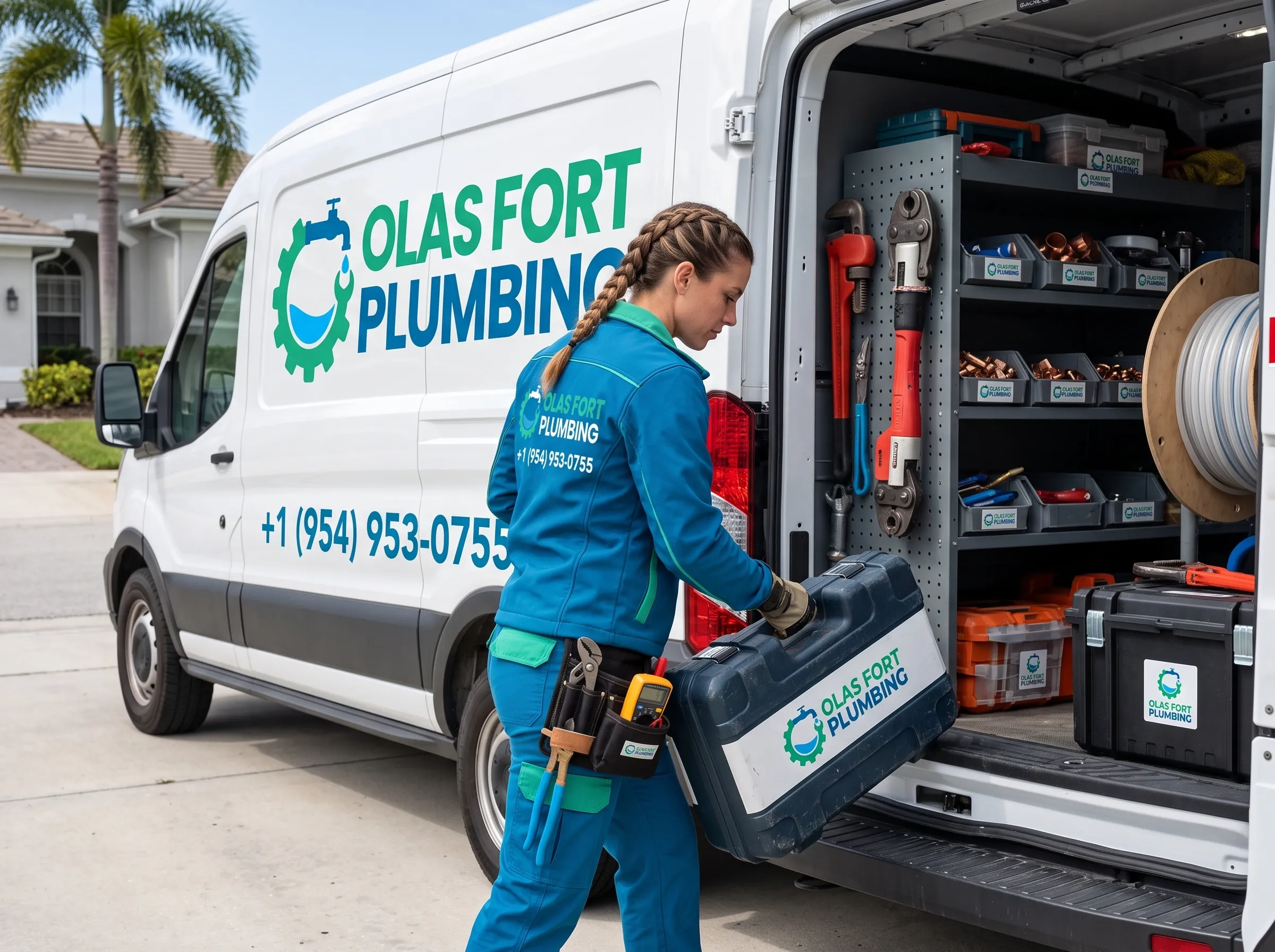
Why Do Fort Lauderdale Drains Back Up When It Rains Hard?
Because this city drains by gravity, and gravity has limits. Fort Lauderdale sits about seven feet above sea level with roughly 165 miles of inland waterways threading through it. City Public Works has said plainly that when canal levels climb too high, stormwater simply stops flowing and sits in place. On April 12–13, 2023, the city recorded 25.91 inches of rain in 24 hours and Fire Rescue fielded roughly 900 calls in a single day. Neighborhoods like Edgewood, Melrose Park, and Melrose Manors were still under six inches of water days later.
Your private lines feel that same pressure. When the public system is at capacity, wastewater has nowhere to go but backward — up through the lowest fixture in the house, which is usually a shower pan or floor drain. Add root intrusion, grease, or a corroded lateral, and a system that works fine in March fails in September. This is why a plumbing emergency Fort Lauderdale residents experience during heavy rain is a different animal than a simple clog, and why we diagnose the whole line with hydro jetting and camera inspection rather than snaking one fixture and leaving.
How Quickly Can a Plumbing Emergency Be Fixed?
Most true emergencies split into two phases: stopping the damage, then repairing the cause. Stopping the damage — isolating a burst line, killing power to a leaking water heater, clearing a mainline stoppage, or setting a temporary bypass — is usually done inside the first visit. Straightforward work like a water heater changeout, toilet reset, or supply‑line repair is typically finished the same day.
The cause takes longer when it lives underground. A collapsed cast iron lateral, a slab leak under a tile floor, or a full re‑drain needs camera diagnostics, locating, permitting through LauderBuild, and inspection sign‑off — realistically several days to a couple of weeks depending on scope, access, and how quickly the city schedules. We tell you which category you are in on the first visit, in plain numbers, before you approve anything. Nobody at Olas Fort Plumbing is incentivized to make a same‑day fix sound like a two‑week project.
What's the Most Effective Emergency Plumbing Repair for Coastal Homes?
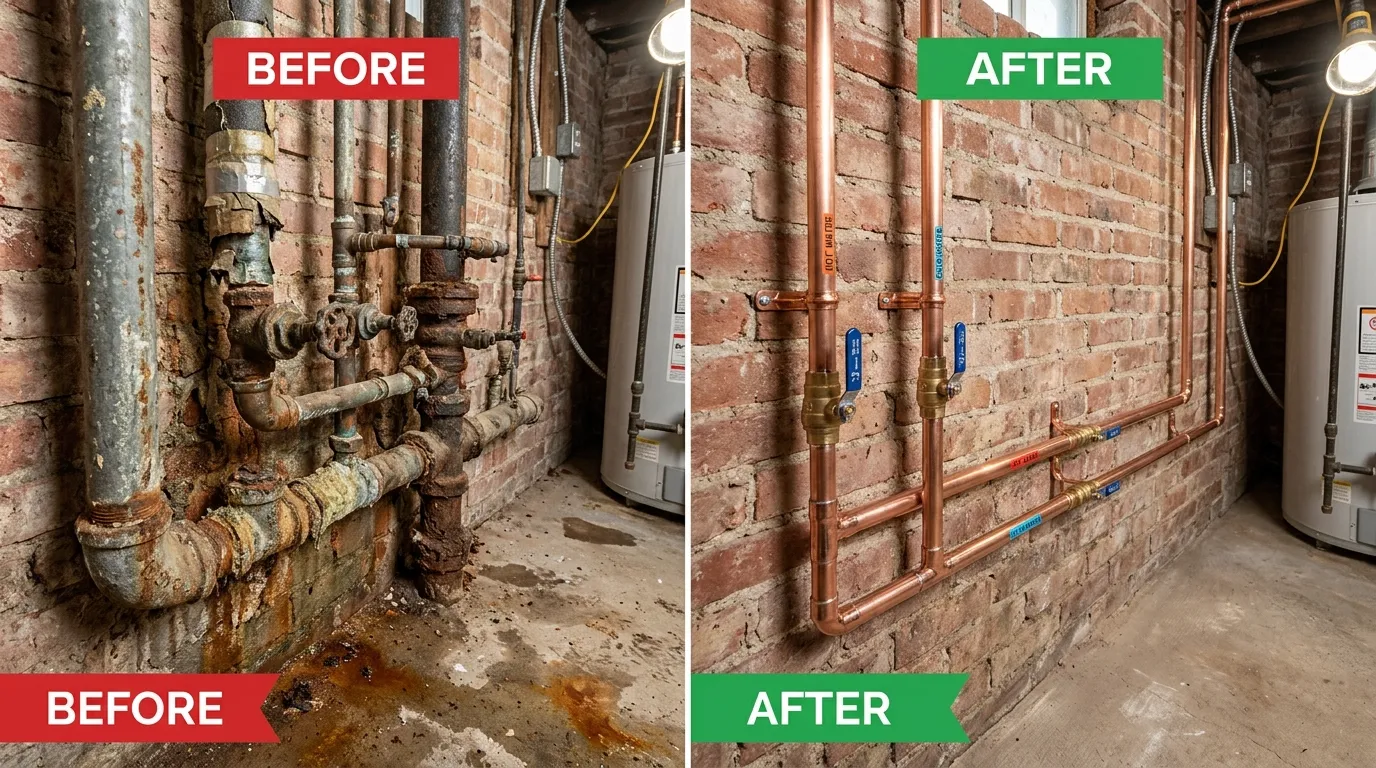
In a salt‑air, high‑water‑table market, the most effective repair is almost never the cheapest patch. Three things separate a fix that holds from one that fails again by next season: correct material selection for coastal conditions, a properly permitted installation, and verification that the rest of the line is sound.
Material matters here more than almost anywhere in the country. Canal‑front and Intracoastal‑adjacent properties face the most aggressive corrosion conditions in Broward County — salt‑laden air eats water heater jackets, T&P valves, exterior hose bibs, and pool equipment lines on an accelerated clock. Galvanized supply and mid‑century cast iron drains were never specified for a seventy‑year service life in this environment. When we replace, we replace with materials rated for what this coast actually does: PEX or Type L copper on the supply side, PVC or cured‑in‑place lining on the drain side, and corrosion‑resistant fittings throughout. Then we camera the line afterward so you can see the result rather than take our word for it.
Why Olas Fort Plumbing Wins — The Emergency Plumber Broward County Trusts
Most plumbing companies publish the same page in forty cities and swap the city name. Fort Lauderdale does not work like anywhere else. Seven feet of elevation, limestone bedrock, a water table that sits inches below the surface in wet season, salt air, and a housing stock built largely between 1940 and 1975 produce a failure profile you cannot copy‑paste from Tampa or Atlanta. We have been working this exact market since 1990 with a single question in front of us: what breaks in Fort Lauderdale, and why does it break here specifically?
System Expertise — Cast Iron, Polybutylene & Slab Leaks
Fort Lauderdale's most common emergency has a birth year. Cast iron drain‑waste‑vent was standard in South Florida until roughly the mid‑1970s, with a commonly cited service life of 50 to 75 years — and in aggressive coastal soil, failure signs show up far earlier. Polybutylene supply pipe, installed roughly 1978 to 1995 and stamped PB2110, is a separate problem entirely.
- Cast iron: sewer odor indoors combined with slow drains at multiple fixtures — not one — almost always means the main lateral, not a fixture clog.
- Polybutylene: Citizens Property Insurance will not insure a property with it, and the 1990s class action settlement has been closed for years. There is no money to claim, only a repipe deadline.
Salt‑Rated Materials & Code‑Compliant Installation
We install to survive this environment and this code book, not to pass a photo. Broward is a High‑Velocity Hurricane Zone, and code administration countywide runs through the Broward County Board of Rules and Appeals — a layer most out‑of‑county contractors have never dealt with.
- Corrosion‑resistant supply materials specified for salt‑air and canal‑adjacent exposure.
- Water heaters installed per manufacturer instructions and current NEC, with proper pan, T&P discharge, and expansion control.
- Permits pulled through LauderBuild on every job that requires one, with inspection sign‑off documented for your records.
Snowbird & Second‑Home Workflows
A meaningful share of this city empties out in May. Victoria Park alone runs around 13.8% seasonally occupied housing. A supply line that lets go in July does not get discovered until November, and by then the damage is structural.
- Pre‑departure shutdown service: main shutoff, water heater isolation, and a documented walkthrough before you head north.
- Return‑season startup: pressure test, fixture check, and water heater recommissioning before you land.
- Remote authorization by phone or email with photo documentation, so you approve work from wherever you are.
Vacation Rental & Airbnb Host Rescue
A guest with no hot water at 9 p.m. is a refund and a one‑star review. Fort Lauderdale's Vacation Rental Registration Program under Ordinance No. C‑16‑25 also means plumbing defects can cost you your certificate, not just a booking.
- Priority dispatch for occupied short‑term rentals, day or night.
- Discreet arrivals and fast in‑and‑out work to minimize guest disruption.
- Documentation formatted for guest messaging and for your annual city inspection file.
Health Risk Anchor — Why Sewage Is Not a Plumbing Inconvenience
A sewage backup is a health event, not a plumbing inconvenience. Category 3 water carries bacteria, viruses, and parasites, and in a climate that holds 75‑degree average temperatures with heavy humidity year‑round, mold colonization can begin within roughly 24 to 48 hours of saturation. Drywall, baseboard, cabinet toe‑kicks, and carpet padding stay wet long after the standing water is gone.
Fort Lauderdale has institutional memory here. In December 2019, a network of 1970s‑era cast iron and ductile iron sewer mains failed across the city, releasing more than 211 million gallons of raw sewage into streets and canals — the Florida Department of Environmental Protection issued a $2.1 million penalty, reported as the largest sewage‑spill fine in state history. The city has been rebuilding public mains ever since. The private lateral running from your house to that main, however, is still yours.
- Do not use fixtures on an affected drain line until the stoppage is cleared — every flush adds volume.
- Keep children and pets out of the affected area, and avoid contact with standing water near outlets or appliances.
- Treat extraction and sanitation as a health service. We carry pollution and environmental liability coverage specifically because this category of work warrants it — see our water damage restoration service.
Licensed, Permitted, Code‑Compliant Plumbing Work in Florida
Florida requires plumbing contractors to hold a Certified Plumbing Contractor license issued by the Department of Business and Professional Regulation, verifiable by anyone at myfloridalicense.com. As of July 1, 2025, House Bill 735 ended local licensing authority statewide — jurisdictions can no longer issue or renew locally Registered licenses, and contractors must hold a state‑issued Certified license. DBPR also requires plumbing contractors to carry $300,000 in general liability coverage plus workers' compensation.
We go further than the minimum because this market rewards it. Olas Fort Plumbing carries general liability, workers' compensation, commercial auto, inland marine tools and equipment coverage, and pollution and environmental liability. Our field certifications include Journeyman Plumber, Backflow Prevention Assembly Tester, Medical Gas (G.A.S.) certification for healthcare and laboratory environments, and EPA Lead‑Safe certification for pre‑1978 structures. On the permit side, work is filed through LauderBuild, and Broward County requires a Notice of Commencement for jobs valued at $5,000 or more — filed with Records, Taxes and Treasury before the first inspection. If a contractor tells you a water heater changeout or repipe does not need a permit in this city, that is your signal to stop.
What's the Most Effective Way to Stop a Plumbing Emergency in Progress?
Before we arrive, the goal is containment. Almost every catastrophic loss we see in Fort Lauderdale got worse in the twenty minutes between discovery and the first phone call — not because the homeowner did the wrong thing, but because nobody had ever shown them where the shutoff was.
Find the Main Shutoff Now
Before you need it. In Fort Lauderdale there are no basements. Your main is typically at the meter box near the street or on the exterior wall closest to it.
Kill Power or Gas to the Water Heater
At the breaker or gas valve before touching a leaking tank.
Open a Low Faucet
After shutting the main, this relieves line pressure and drains standing water out of the system.
Stay Clear of Water Near Electrical
No exceptions, and no photos of it either.
How We Compare to Typical Plumbing Companies in Broward
Fort Lauderdale property owners have been burned by storm‑chasing contractors and operators who steer every diagnosis toward an insurance claim. Here is an honest comparison of service models — not named competitors, but the three profiles you will actually encounter when you start calling.
| Company Type | Emergency Availability | Local Expertise | Pricing Transparency | Permits & Licensing | Documentation |
|---|---|---|---|---|---|
| National Franchise Brand | 24/7 call center; technician may be routed from another county | Regional training, limited Fort Lauderdale‑specific knowledge | Flat‑rate book pricing, often not disclosed until on‑site | Generally compliant, varies by franchisee | Inconsistent |
| Small Independent / Handyman | Business hours, voicemail after 5 p.m. | Often strong, but crew depth of one or two | Verbal quotes, cash‑preferred | Frequently unpermitted; may not hold a CFC license | Rare |
| Insurance‑Steering Operator | Fast response, aggressive scoping | Diagnosis often framed around claim eligibility | "We'll handle the claim" replaces a real quote | Varies | Built for the adjuster, not for you |
| Olas Fort Plumbing | 50 professionals, 10 vans, 24/7/365 with live answer | Fort Lauderdale‑based since 1990; cast iron, slab, canal‑front, condo stack | Written estimate before work begins | State‑certified, fully insured, permits filed through LauderBuild | Camera footage and permit records provided |
What Makes Us Different
We are not trying to be the biggest plumbing outfit in South Florida. We are trying to be the one that Fort Lauderdale property owners call twice.
Local Since 1990
Not a regional brand with a Fort Lauderdale landing page — a 33301 address on NE 8th Avenue, minutes from Las Olas and downtown.
Real Capacity
50 skilled professionals and 10 fully loaded service vans mean an emergency plumbing service Fort Lauderdale callers reach at 3 a.m. actually gets a truck, not a callback.
Written Estimates Before Work
You see scope and price in writing. No approvals extracted from a homeowner standing in an inch of water.
Camera‑Verified Diagnostics
If we say your lateral is failing, we show you the camera footage. If it isn't, we tell you that too.
Permit‑Compliant by Default
LauderBuild filings, Broward Board of Rules and Appeals compliance, inspection records handed to you.
Specialist Certifications
Backflow Prevention Assembly Tester, Medical Gas (G.A.S.), and EPA Lead‑Safe — credentials most residential shops do not carry.
Full Commercial Coverage
Grease interceptors, restaurant and hospitality lines, multi‑family risers, and condo stack work handled by commercial plumbing crews who do it daily.
Is Hiring an Emergency Plumber Worth It?
Run the arithmetic. A supply line failure discharging into a conditioned space produces drywall, flooring, cabinetry, and often mold remediation costs that dwarf the plumbing repair itself — and in this climate, the mold clock starts inside two days. A sewage backup adds contamination protocols on top of that. Against that exposure, a service call is not the expensive part of the evening.
The second argument is diagnostic. A great many Fort Lauderdale "clogs" are not clogs. They are a cast iron lateral that has scaled down to a fraction of its original diameter, or a bellied section holding water, or root intrusion at a joint. Snaking that line buys you six weeks. Cameraing it tells you whether you are looking at a $400 clearing or a lining project — and lets you plan the second one instead of being ambushed by it.
Bottom line: A cheap fix that fails during the next storm was never cheap. We would rather tell you the truth on the first visit and earn the repipe honestly than sell you four emergency calls in a year.
Before & After Emergency Plumbing in Fort Lauderdale — Real Jobs, Real Results
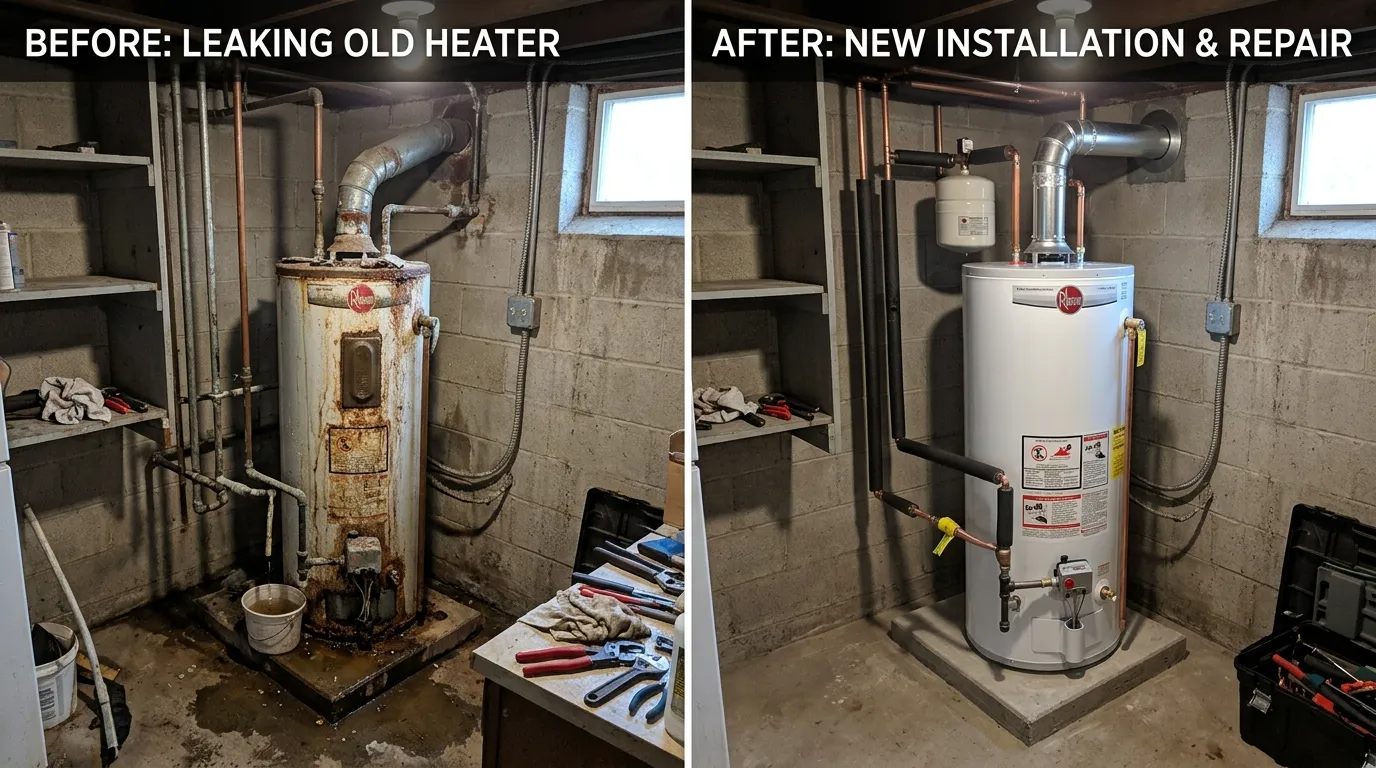
We do not use stock imagery. Our project documentation shows actual Fort Lauderdale work: sewer camera stills from cast iron laterals in Victoria Park and Rio Vista, slab leak locates under mid‑century terrazzo, cured‑in‑place liner installations, water heater replacements with corrected pan and T&P discharge, and backflow assembly installs brought into compliance with city code. Every job file carries date‑stamped photos, the technician on record, and permit numbers where applicable — because in a market this saturated with claims, verifiable beats impressive.
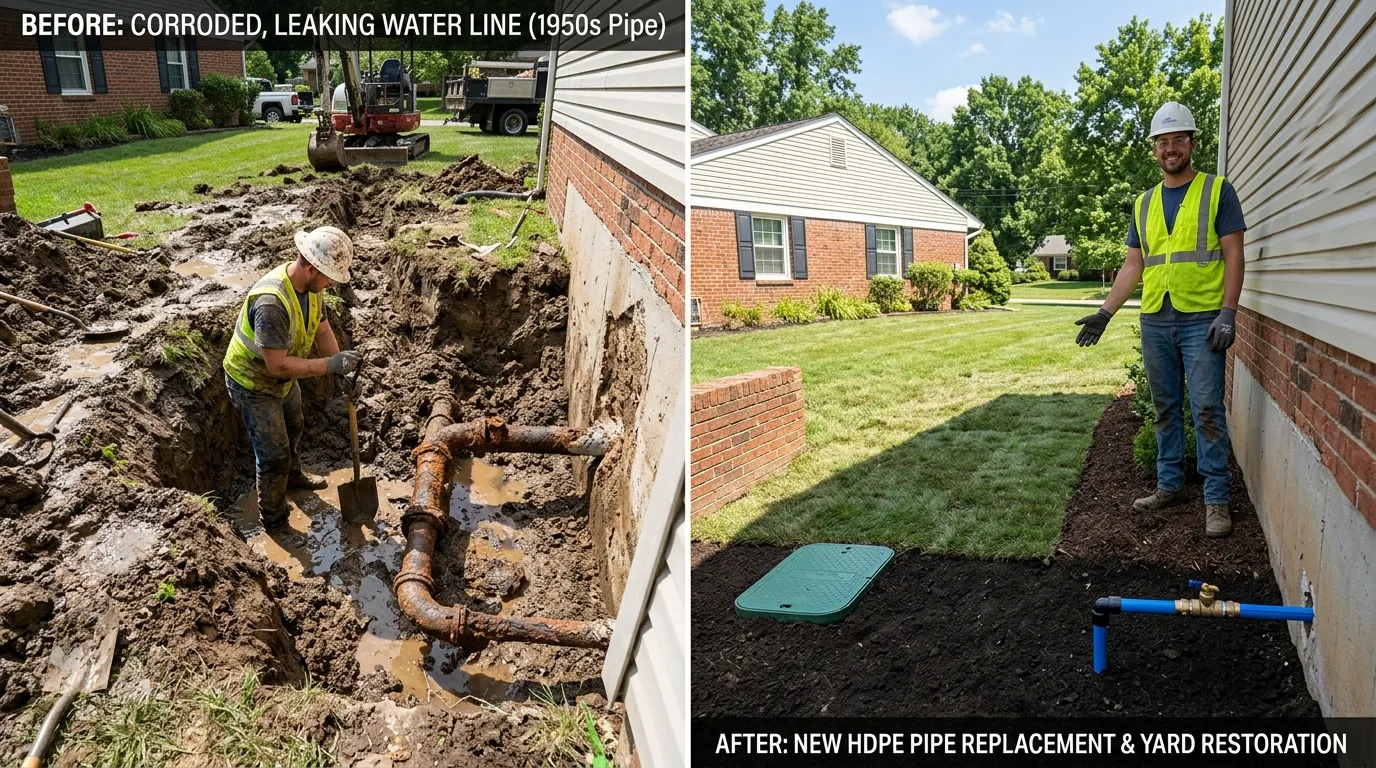
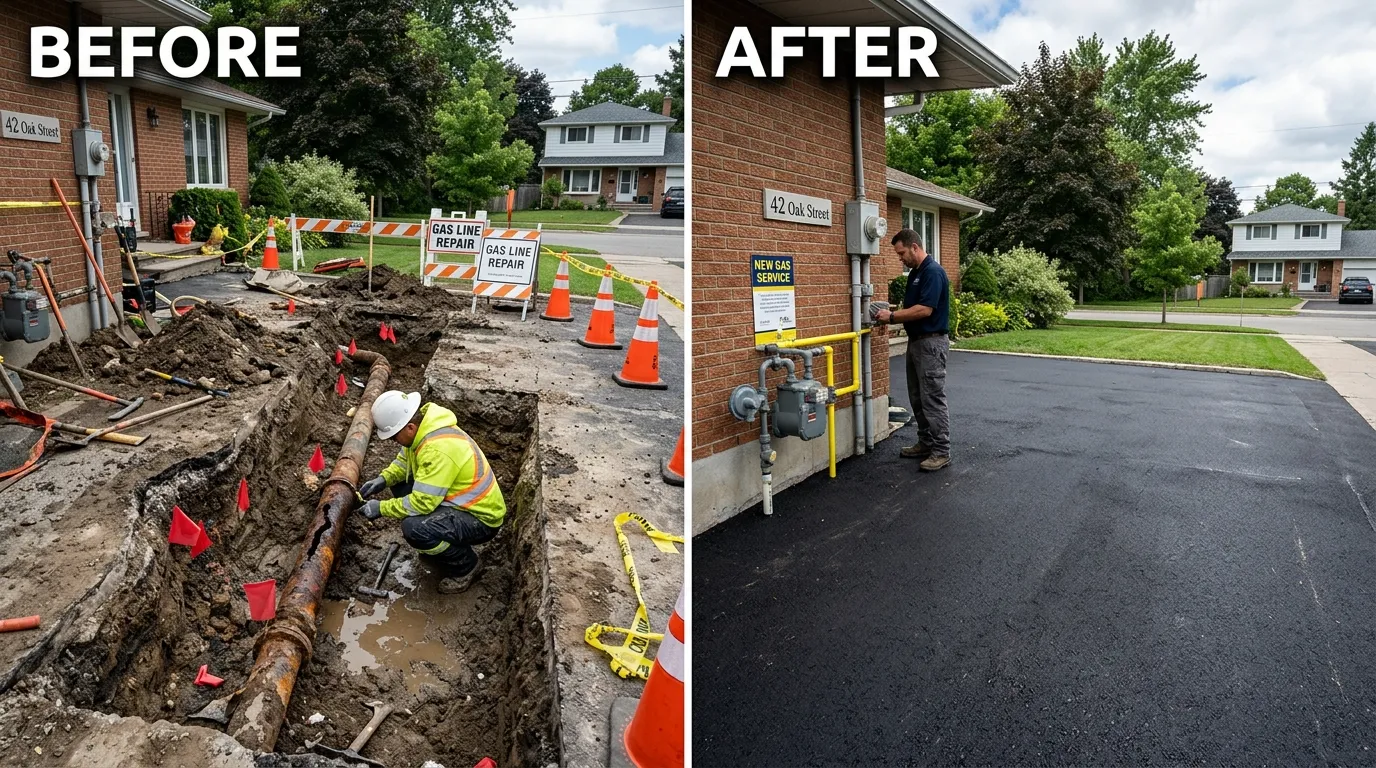
How Plumbing Fails in Fort Lauderdale (Seasonal Calendar & Risks)
June – September (Wet Season & Hurricane Peak)
Peak rainfall, peak groundwater, peak call volume. Saturated soil raises the water table against building drains, canal levels slow gravity drainage, and marginal laterals fail under load. Hurricane season runs June 1 through November 30, and every named storm brings power loss, pressure fluctuation, and post‑storm boil‑water advisories.
- Mainline backups spike during and immediately after heavy rainfall events.
- Sump and lift station failures during outages — critical for below‑grade garages and elevator pits.
- Post‑storm: check water heaters and any fixture that sat unused during evacuation.
October – December (King Tides & Season Arrival)
Tidal flooding season peaks in October and November. The city has documented dozens of tides in a single September exceeding its flooding threshold, hitting Las Olas Isles, Victoria Park, Rio Vista, and the Southeast Isles hardest. Meanwhile the seasonal population returns and vacant homes come back online all at once.
- Tidal backflow into private drainage — the city itself recommends check valves in private systems.
- Reopening houses after five months closed: stagnant lines, failed water heaters, dried‑out traps.
- The city advises relocating water heaters, washers, and electrical panels to elevated positions in flood‑prone areas.
January – March (Peak Season & Full Occupancy)
Dry season, maximum occupancy, maximum load. Restaurants along Las Olas and the beach corridor run at capacity, short‑term rentals turn over weekly, and household fixture use in seasonal properties triples overnight. Systems that idled all summer get stress‑tested in a week.
- Grease interceptor and kitchen line failures peak with restaurant volume.
- Short‑term rental emergencies cluster here — occupied units, out‑of‑state owners.
- Backflow assembly compliance testing comes due for many commercial and irrigation accounts.
April – May (Dry Season & Pre‑Storm Prep)
The quiet window, and the smartest month of the year to spend money on plumbing. Ground is dry, schedules are open, and everything you fix now is something that will not fail in August. This is also when departing seasonal residents should shut down properly.
- Camera inspections and lining work at scheduled rates rather than emergency rates.
- Pre‑departure shutdowns for snowbirds and second‑home owners.
- Water heater replacement before hurricane season, not during it.
Scheduling Intelligence
Getting a truck to your door in this city is a logistics problem, not just a dispatch problem. Our routing accounts for drawbridge schedules on Las Olas, Sunrise, and the 17th Street Causeway; I‑95 and US‑1 congestion during season; active Fortify Lauderdale and sewer force‑main construction across Victoria Park, Rio Vista, Harbordale, and Sunrise Intracoastal; gated communities and guard‑house clearance in Harbor Beach and the Isles; and building engineer access and water shutoff scheduling for downtown high‑rises. We ask about access on the phone so the crew arrives with the right equipment and the right approvals — not to make small talk while your floor floods.
How Can I Stop Plumbing Emergencies From Coming Back?
Emergency work treats the event. Prevention treats the cause, and in Fort Lauderdale the causes are well documented and largely fixable.
Camera your main lateral once if you have never done it and your home predates 1980. You will either sleep better or get a decade of warning. Book a sewer camera inspection.
Install a backwater valve if you are in a low‑lying or tidal‑flood‑prone neighborhood — it is the single best defense against a rain‑driven backup.
Keep grease and wipes out of the system. "Flushable" is a marketing term, not an engineering standard, and it is the number one cause of avoidable mainline stoppages we clear.
Service the water heater annually. Biscayne Aquifer water is limestone‑sourced and moderately hard; scale on the element shortens tank life and drives up energy cost.
Test backflow assemblies on schedule. Fort Lauderdale codified its cross‑connection and backflow ordinance in 2015; non‑compliance can result in water service termination.
What We Fix — From Symptoms to Targeted Remedies
We do not deal in vague marketing language. Here is what you are likely seeing, and what it usually means.
Sewage backing up into a shower or floor drain
Mainline stoppage or failing lateral. Camera first, then clear, line, or replace.
Slow drains at multiple fixtures plus indoor sewer odor
Main lateral, not a fixture clog. Cast iron scaling or a bellied section.
Warm spot on the floor, running meter, no visible leak
Slab leak. Acoustic and thermal locating before anything gets opened.
No hot water, or rusty water from hot taps only
Water heater failure or tank corrosion accelerated by salt air and hard water.
Water bubbling up in the yard or a sinkhole‑like depression
Water service line break between meter and house, which is your responsibility, not the city's.
Low pressure across the whole house
Galvanized supply corrosion, pressure regulator failure, or a partially closed main after utility work. See pipe repiping.
Gurgling toilet when the washer drains
Venting or partial mainline obstruction. Early warning, not a nuisance.
Every diagnosis comes with photos or camera footage, a written scope, and a straight recommendation on what needs doing now versus what can be planned. You will always be told which is which.
How Expensive Is Emergency Plumbing in Fort Lauderdale?
Three things drive the number: what failed, when you called, and how hard the failure is to reach. A toilet reset is not a sewer lateral replacement, and a Tuesday afternoon is not a Sunday at midnight.
Nationally, emergency plumbing service typically carries a call‑out or trip fee in the range of $150 to $350, with after‑hours, weekend, and holiday labor commonly running 1.5 to 2 times standard rates and holidays sometimes higher. Those are market figures, not our price list — your actual quote depends on access, pipe depth, materials, and permit scope, and we will not pretend otherwise on a webpage.
What we will commit to: you get a written estimate before work begins, you are told the diagnostic fee up front on the phone, and you will never be handed a surprise line item after the fact. We also run standing offers on drain clearing, annual water heater tune‑ups, whole‑home plumbing inspections, toilet supply and installation, and a new‑customer maintenance special — ask for current pricing when you call.

Our Proven 6‑Step Olas Fort Plumbing Emergency Process
Live Phone Triage (2–5 Minutes)
A real person answers, day or night. We ask what you are seeing, which fixtures are affected, whether water is still moving, and whether you have found your main shutoff. If you have not, we walk you to it on the call. We also confirm access details — gate codes, building engineer contact, parking, drawbridge‑side of the property — so the van arrives ready.
On‑Site Diagnosis & Camera Inspection
The technician isolates the failure and identifies the cause rather than the symptom. For any drain or sewer complaint, that means a camera in the line. We locate and depth‑mark underground issues so you know exactly where the problem sits before anyone discusses excavation.
Written Scope & Upfront Estimate
You get the findings in writing with photos or video, a clear scope, and a price — before work begins. Where more than one route exists, such as clearing versus lining versus full replacement, you get all of them with the trade‑offs explained honestly, including what each one buys you in years.
Stabilize & Stop the Damage
First priority is always containment: isolate the line, kill power or gas to a failing appliance, clear the stoppage, or set a temporary bypass so the property is safe and usable. In most cases this happens on the first visit, regardless of how long the permanent repair will take.
Permitted Permanent Repair
Repairs are made with materials rated for coastal conditions and filed through LauderBuild where a permit is required, with Notice of Commencement handled on qualifying jobs. Trenchless options — cured‑in‑place lining and pipe bursting — are offered wherever the line condition allows, because tearing up a Fort Lauderdale driveway should be the last resort, not the default.
Verify, Document & Hand Off
We re‑camera the repaired line, pressure‑test where applicable, and walk the inspection through to sign‑off. You receive photo documentation, permit records, and warranty terms in writing — the file you will want if you sell the property or face an insurance review.
What's Included in an Olas Fort Plumbing Emergency Call?
Every emergency dispatch follows the same sequence, whether it is a single‑family home in Croissant Park or a restaurant kitchen on Las Olas Boulevard.
- Live phone triage — symptoms, safety, shutoff guidance, and access planning.
- On‑site diagnosis — full inspection of the affected system, not just the visible fixture.
- Camera inspection on any drain, sewer, or recurring‑stoppage complaint.
- Written estimate with photo or video evidence before work is authorized.
- Immediate stabilization to stop active damage and make the property safe.
- Permitted repair with corrosion‑rated materials and city inspection where required.
- Documented handoff — footage, permit records, and written warranty terms.
Vacation Rental & Airbnb Hosts — Protect Your Five‑Star Rating
Fort Lauderdale short‑term rentals answer to three layers of compliance: a state DBPR license, a Broward County business tax receipt, and city registration with annual inspection under Ordinance No. C‑16‑25. A plumbing defect does not just cost you a booking — it can cost you the certificate that lets you rent at all.
We provide priority dispatch for occupied units, documentation formatted for your annual city inspection file, and pre‑season system checks timed before your heaviest booking months.
Get Priority Dispatch for Your Rental — (954) 953‑0755
Social Proof Summary — Serving Fort Lauderdale and Broward County Since 1990

Olas Fort Plumbing has operated out of Fort Lauderdale since 1990. That is not a marketing line about longevity — it is the reason we can tell you what is under a 1958 Coral Ridge slab before we open it, and why we recognize a Fortify Lauderdale construction detour on a street before dispatch does. Fifty skilled professionals and ten fully equipped service vans give us the depth to answer at 3 a.m. and still show up for scheduled work at 8 a.m.
Every job leaves a record: date‑stamped photos, camera footage where diagnostics warranted it, permit numbers, and the technician on file. Whether you searched for an emergency plumber Ft Lauderdale or spelled the city out in full, you land with the same crew, the same written‑estimate policy, and the same 24‑hour phone. Our specializations are deliberately narrow and deep — drain and sewer cleaning, leak detection, water heater service, backflow testing, and re‑piping — because those five categories account for the overwhelming majority of what actually fails in this city.
Our Emergency Plumbing Services in Fort Lauderdale
We handle the full residential and commercial range, but these are the calls that come in hot.
Drain Cleaning & Hydro Jetting
Mainline stoppages, grease‑fouled kitchen lines, recurring backups.
Sewer Line Repair & Trenchless Replacement
Cured‑in‑place lining, pipe bursting, cast iron re‑drain.
Sewer Camera Inspection
Diagnostics, pre‑purchase sewer scopes, post‑repair verification.
Water & Slab Leak Detection
Acoustic, thermal, and pressure‑based locating under slab and behind walls.
Water Heater Repair & Replacement
Tank and tankless, with code‑compliant pan, T&P, and expansion control.
Pipe Repiping & Water Line Repair
Polybutylene and galvanized replacement, service line breaks.
Backflow Testing, Repair & Replacement
Annual compliance filing for residential, commercial, and irrigation accounts.
Commercial Plumbing
Grease interceptors, restaurant lines, multi‑family risers, medical gas, and condo stack work.
Septic Tank Cleaning & Pumping
For Broward's remaining unsewered pockets and wet‑season drainfield failures.
Water Damage Restoration
Extraction and drying following a plumbing loss.
What's the Safest Thing to Do Before the Plumber Arrives?
Shut the water off, then stop. That is genuinely the whole answer for most situations, and it is the one step that separates a repair from a claim.
Beyond the main shutoff, the safest posture is restraint. Do not pour chemical drain opener into a line you are about to have a technician work on — it does not clear a collapsed cast iron lateral and it makes the job hazardous for whoever opens that pipe. Do not run a shop vac through standing sewage without protection. Do not chase a slab leak by breaking tile to "have a look." Move what you can lift, photograph the damage for your own records, keep people and pets clear of water near anything electrical, and let a licensed crew take it from there. South Florida emergency plumbing goes wrong most often in the gap between a good instinct and the wrong tool.
SAFETY NOTICE
If you smell gas, suspect a leak, see sparking or arcing, or face any immediate hazard: leave the property first. Then call 911 and your utility's emergency line from outside. Call us once you are safe. Do not re‑enter to shut anything off.
Got Questions?
We would rather answer a question for free than fix a bigger problem later. If you are unsure whether what you are seeing counts as an emergency, call and describe it — we will tell you honestly whether it can wait until morning.
Visit
20 NE 8th Ave
Fort Lauderdale, FL 33301
Hours: Open 24 hours, 7 days a week, 365 days a year
One call reaches a live person, not a menu — and if the situation warrants it, a truck. That is what it should mean to have an emergency plumber Fort Lauderdale FL property owners can actually count on.
Serving Fort Lauderdale Homeowners and Property Managers Since 1990
We stand behind the work in writing. Every repair carries documented warranty terms provided at handoff, and every permitted job comes with inspection records you keep. If something we repaired fails within its warranty period, we come back and make it right — no debate, no re‑diagnosis fee, no runaround. Thirty‑six years in one city does not happen by arguing with the people who live here.
Call (954) 953‑0755
Fort Lauderdale Plumbing Gallery — Before & After
See how we diagnose, repair, and document plumbing work across Broward County.
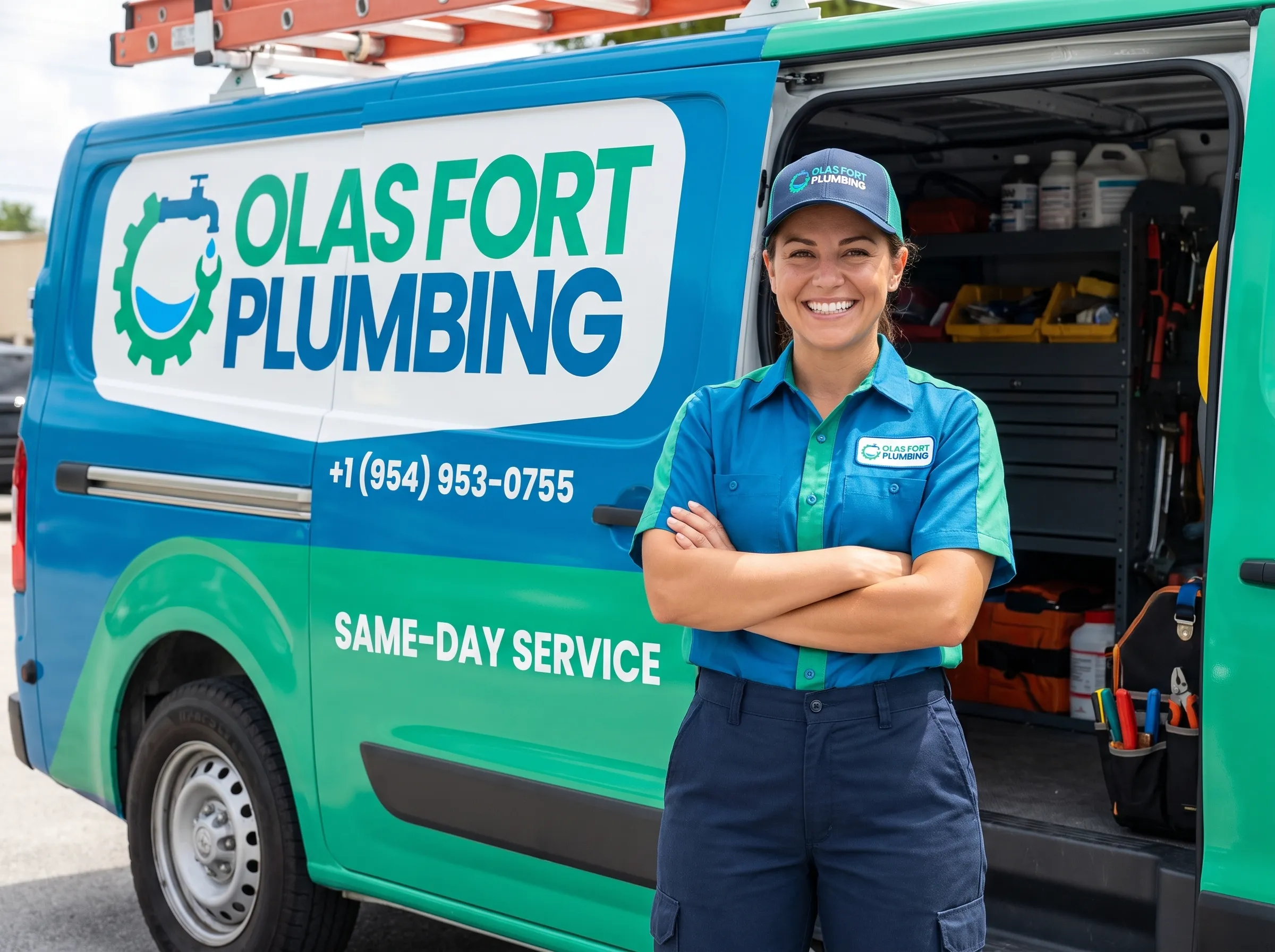
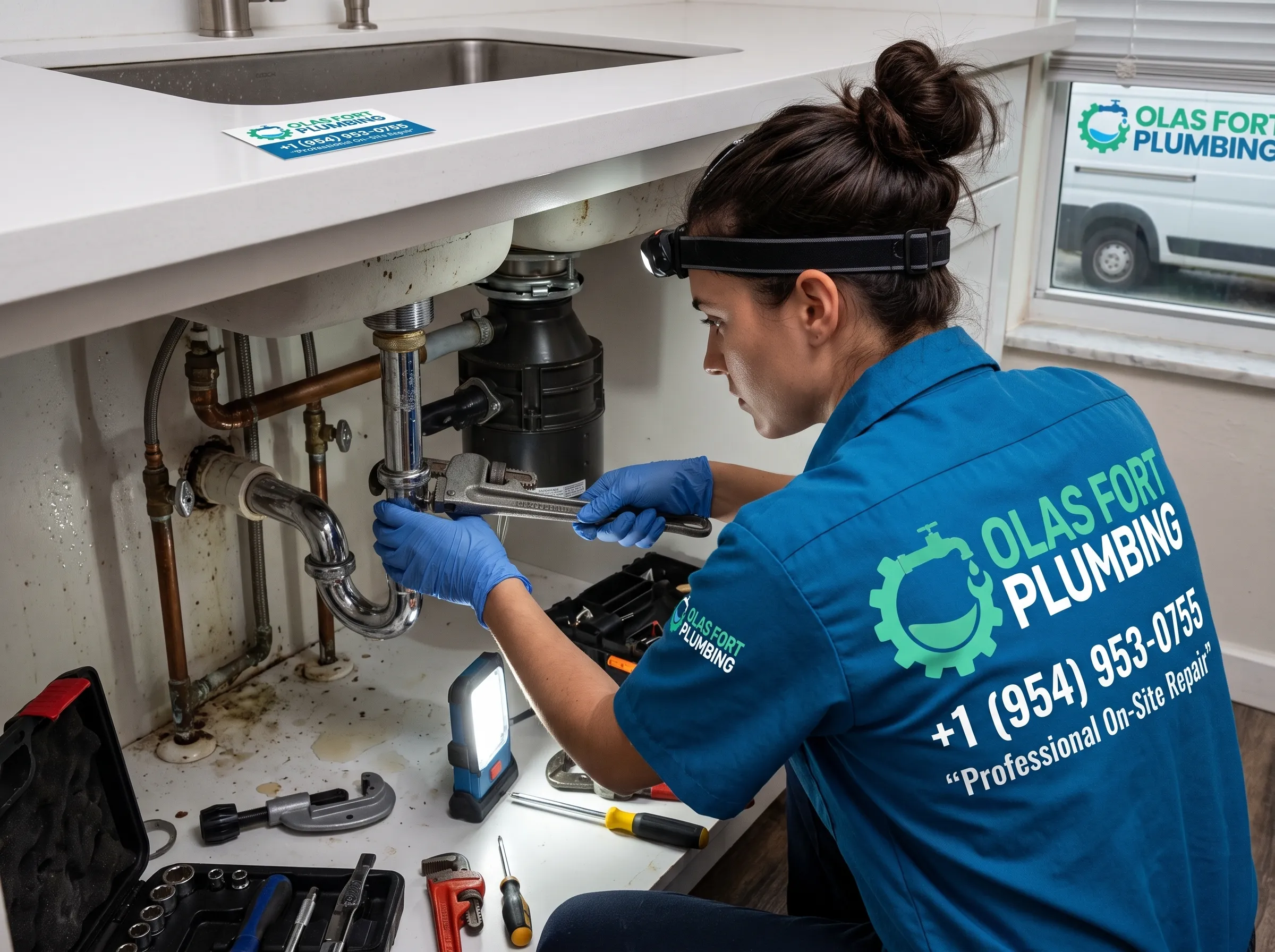
Our gallery covers real projects completed throughout Fort Lauderdale and surrounding Broward communities — cast iron lateral camera footage from Victoria Park and Rio Vista, slab leak locates in Coral Ridge, trenchless liner installations, water heater replacements corrected to code, grease interceptor service on Las Olas, and backflow assemblies brought into city compliance. Each image is tied to a dated job file with technician initials and permit numbers where applicable. No stock photography, no borrowed work.

Who Are the Best Emergency Plumbers in Fort Lauderdale?
Still searching for an emergency plumber near me Fort Lauderdale at an hour when most companies have gone to voicemail? Here is a fair way to judge. Ask for the CFC license number. Ask whether they pull permits through LauderBuild. Ask whether a camera goes into the line before anyone quotes a sewer repair. Ask what the diagnostic fee is, on the phone, before the truck moves. Any company worth hiring answers all four without hesitating.
Olas Fort Plumbing has been answering those questions in this city since 1990, from a 33301 address on NE 8th Avenue. We cover Fort Lauderdale proper — Victoria Park, Las Olas Isles, Rio Vista, Coral Ridge, Sailboat Bend, Flagler Village, Croissant Park, Edgewood, Harbordale, Tarpon River, Riverland, Middle River Terrace, and the rest — plus surrounding Broward communities including Wilton Manors, Oakland Park, Lauderdale‑by‑the‑Sea, Plantation, Davie, Dania Beach, Hollywood, Pompano Beach, Coral Springs, Margate, and Weston.
Whether it is a burst supply line at midnight, a mainline backup during a summer downpour, a failed water heater the morning your guests arrive, or a backflow assembly that just failed its annual test, the process is the same: a live answer, a real diagnosis, a written price, and a permitted repair you can verify afterward.